
2026: Year of the Turtle
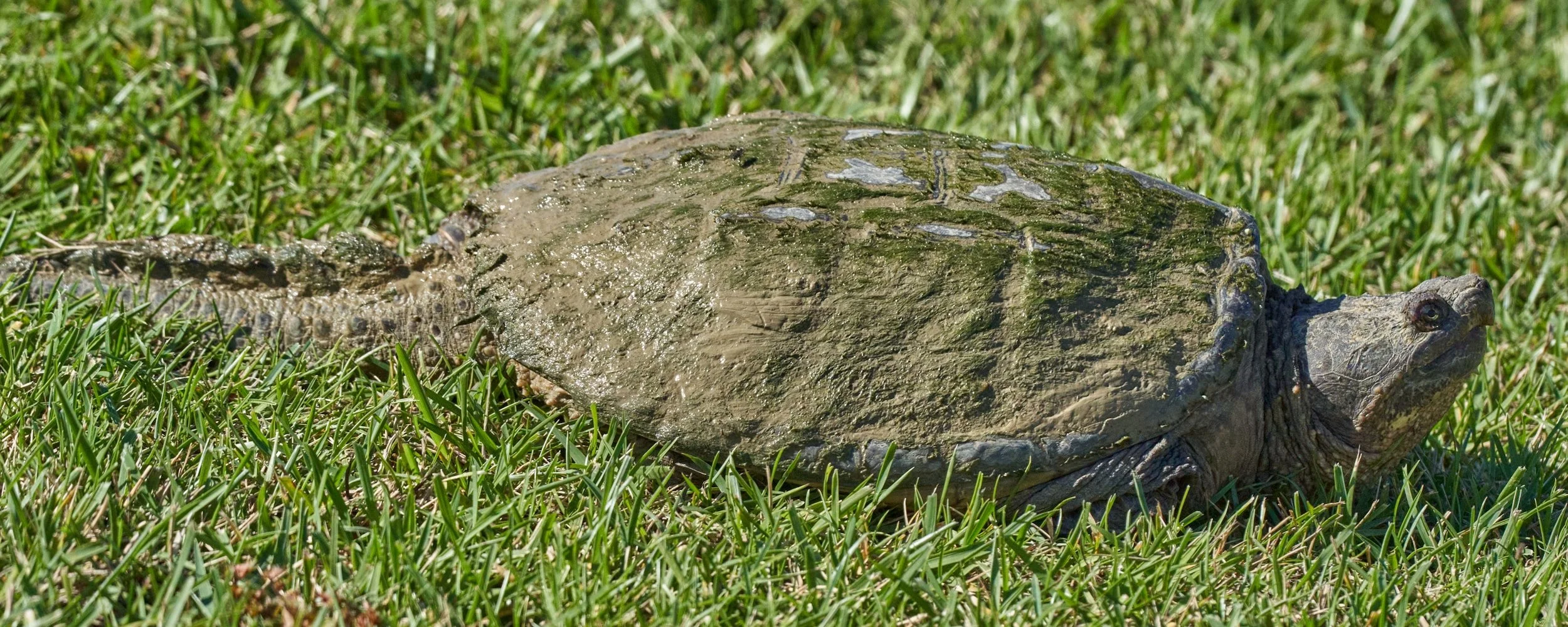
Common Snapping Turtle
The common snapping turtle can be found throughout New York State. This species prefers to live in slow moving water. They can grow to be between 8-20 inches, and up to 35 pounds.
Their dark colored shell is used to camouflage them against the muddy bed of their marine habitat.
It is also the official state reptile of New York.
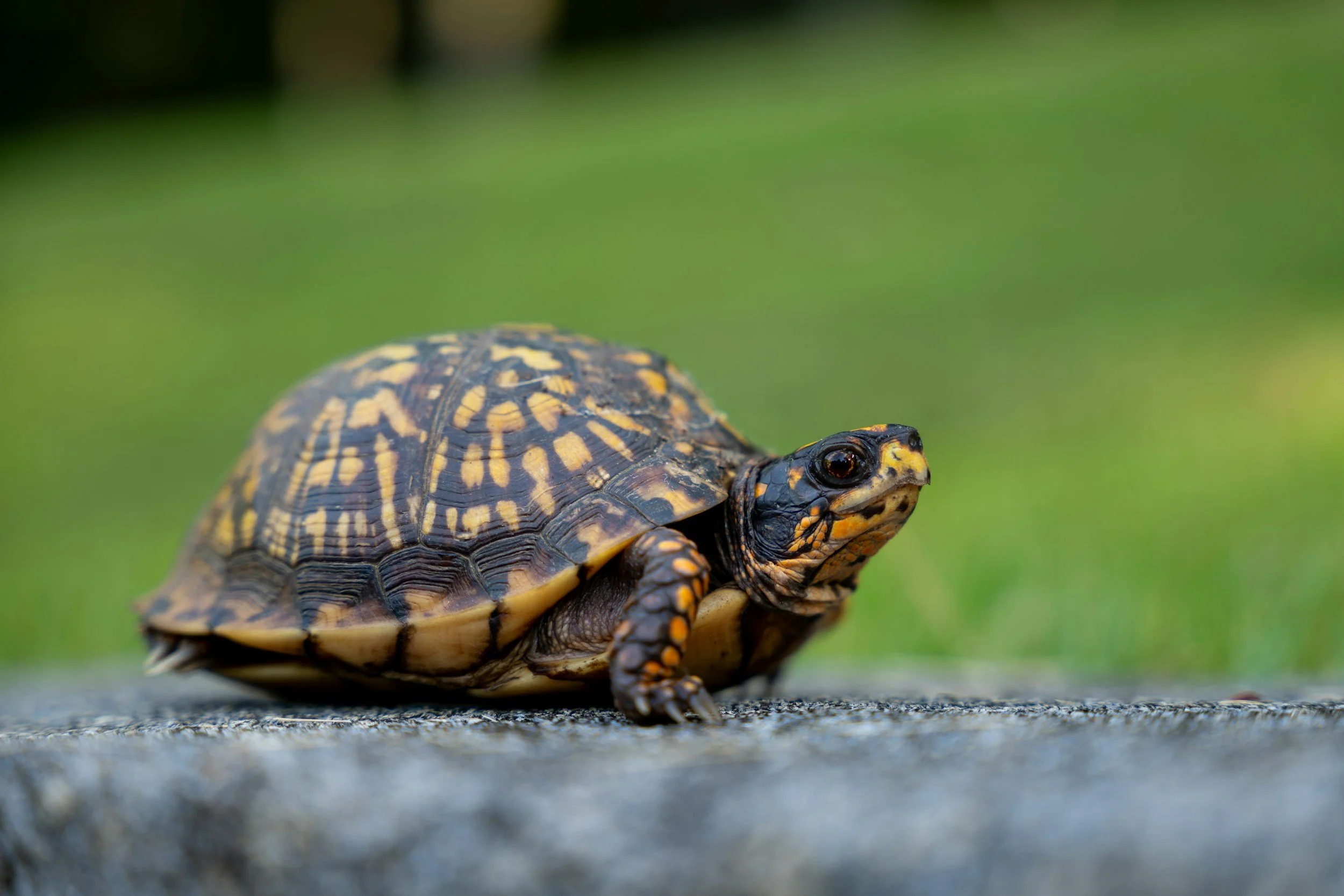
Eastern Box Turtle
Eastern box turtles walk through forests, going to water when the weather is hot. They can close their shell completely, which other turtles cannot do. They eat berries, mushrooms, slugs, and worms.
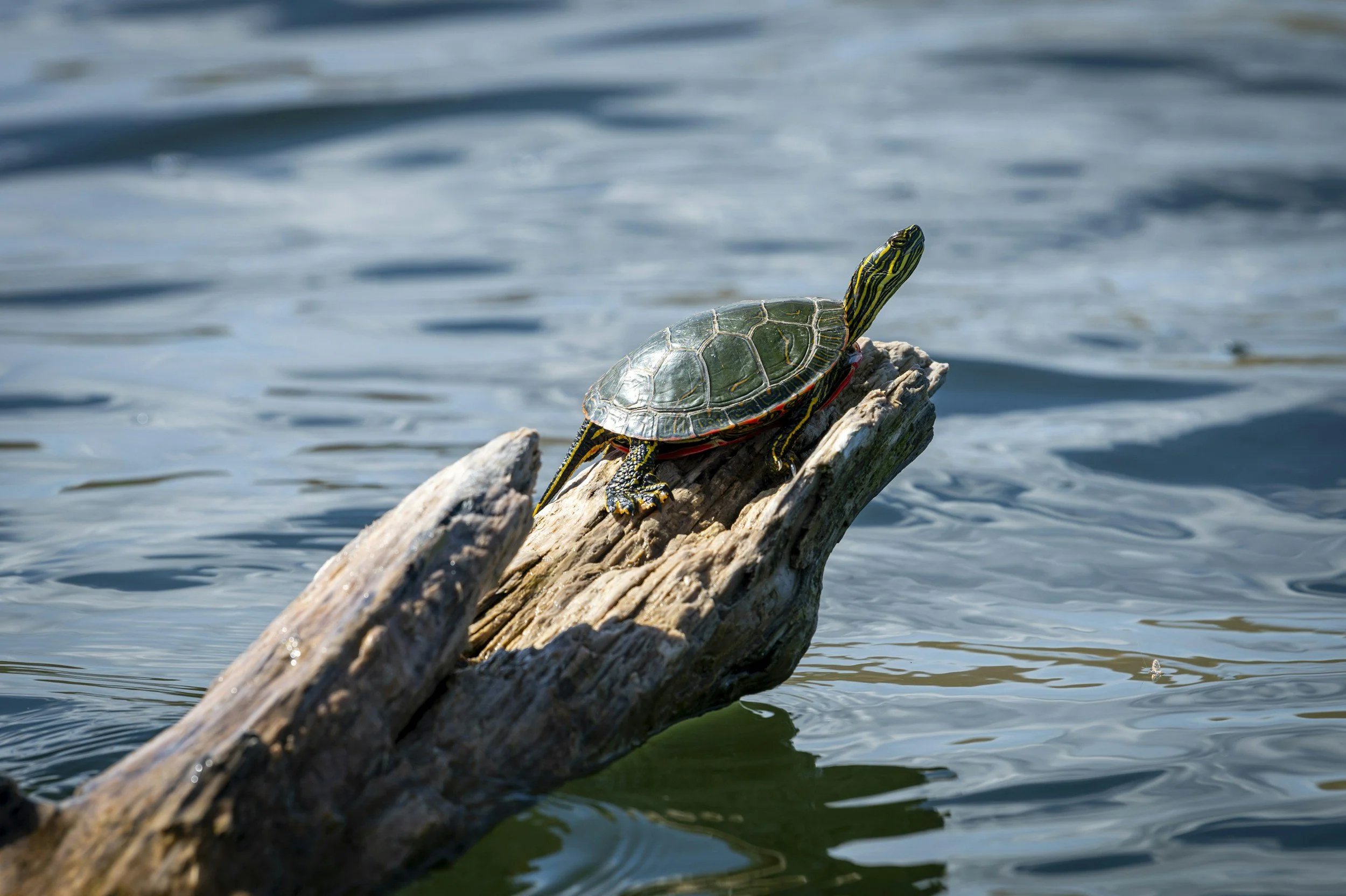
Painted Turtle
Painted turtles are a very common species of turtles in New York State. They can be seen basking in the sun on logs. There are two subspecies of painted turtle, the Eastern painted turtle and the Midland painted turtle.
Spotted turtles are black with yellow spots on its body. They are found in swamps and marshes.
They are sensitive to poor water quality and pollution.
They eat insects, snails, worms, and tadpoles.
Features of a turtle
Turtles have a shell made out of bones, such as the ribcage, with a layer of keratin. Keratin is what our finger nails are made of.
The top half of the shell that covers a turtle’s back is called a carapace, and the bottom half of the shell that covers its underside is called a plastron.
Turtles are reptiles. Reptiles cannot regulate their own body heat like mammals, so they utilize warm surfaces or basking in the sun to stay warm.
Turtles and tortoises are different. Turtles spend most of their life near water, and tortoises live only on land.
Turtles can be found on every continent except for Antarctica.
Turtles have existed on earth for 230 million years and coexisted with the dinosaurs.
Habitat
Turtles can be found in several different habitats. These include rivers, ponds, marshes, bogs, streams, and vernal pools.
diet
The diet of turtles varies between species. Snapping turtles are omnivores, meaning they eat both plants and meat. They eat aquatic plants, frogs, snakes, bird eggs, and fish. Other species like the spotted turtle, eat worms and slugs.
nesting
Most turtles lay eggs from May-June. Their eggs can be found in sand, lawns, gravel, or moss.
The eggs incubate for 2-3 months, and hatch in August. Some species of turtle stay in their eggs through the winter and hatch in the spring.
Eggs incubated in warmer temperatures tend to be all female, whereas eggs incubate in colder temperatures tend to be all male.
Species of turtles, such as the snapping turtle, do not stay with their eggs until they have hatched. This makes it easier for some animals like foxes, skunks, and raccoons to eat turtle eggs.
What you can do
There are ways you can help protect turtles. First, if you see a turtle crossing the street, try not to run it over. If it is safe to pull over, remove the turtle from the street and make sure to place it in the same direction it was going. Moving turtles to a new location can impact the population. Additionally, try to pick up trash. Litter can make its way into different habitats, which can harm turtles and other species of plants and animals.
Learn more
Further information about turtle species in New York State can be found on this website: Turtles of New York
Information from the New York State Department of Conservation (DEC) on protecting turtles - DEC Urges New York Drivers to ‘Give Turtles a Break’
Information on sea turtles in New York State: Sea Turtles-NYSDEC